Scripps Main Website Marine EM Lab Main Website Marine EM Laboratory


Software

Click the images to visit the homepages for each piece of software. Most of this work has been funded by the Seafloor Electromagnetic Methods Consortium.

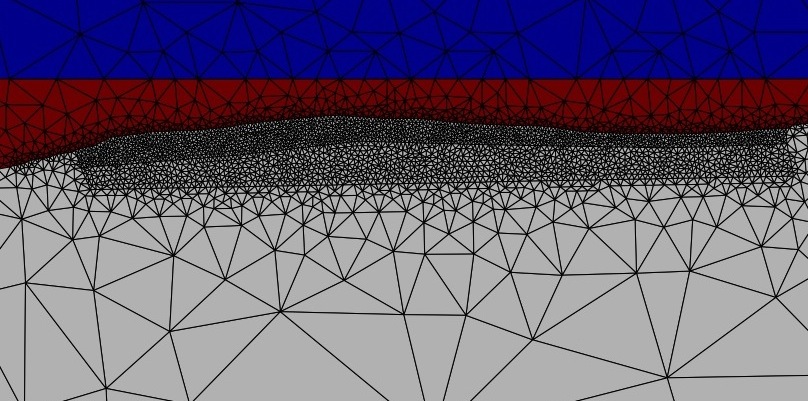
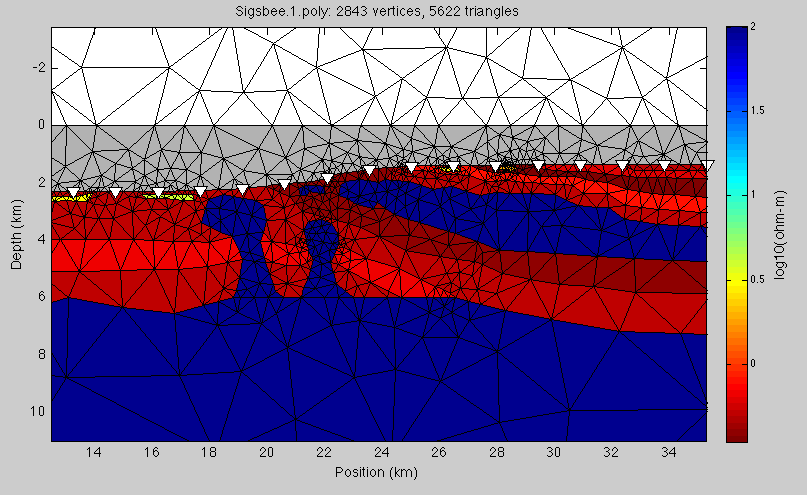
MARE2DMT: Modeling with Adaptively Refined Elements for the 2D Magnetotelluric Method. This is an adaptive finite element modeling code written in Fortran 90 and designed for modeling MT responses from arbitrarily complicated 2D structures. The MARE2DMT package comes with Matlab programs for rapid model design and easy response plotting. Developed with Chester Weiss. Currently available to funding sponsors in the Seafloor Electromagnetic Methods Consortium.

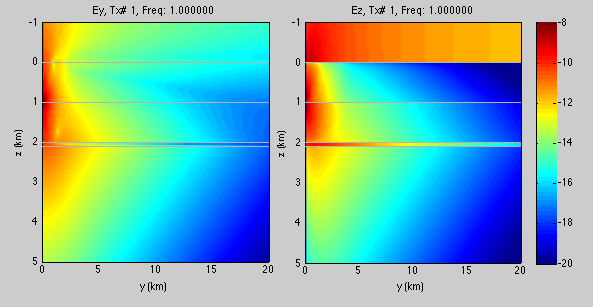
MARE2DCSEM: Modeling with Adaptively Refined Elements for the 2.5D Controlled-Source Electromagnetic Method.Developed with Yuguo Li. Currently available to funding sponsors in the Seafloor Electromagnetic Methods Consortium.
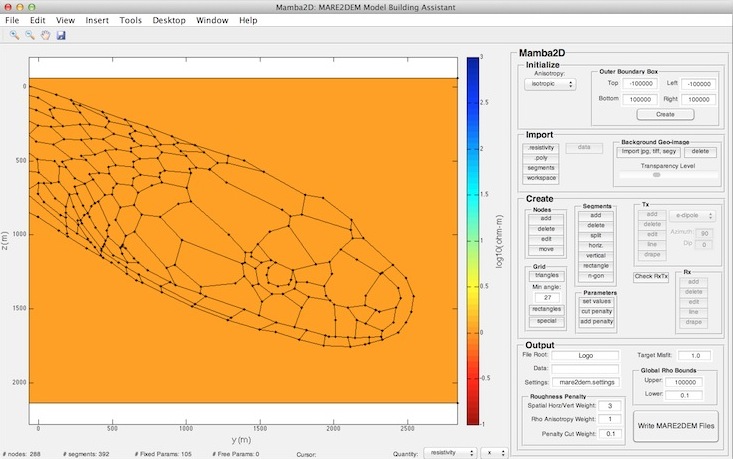
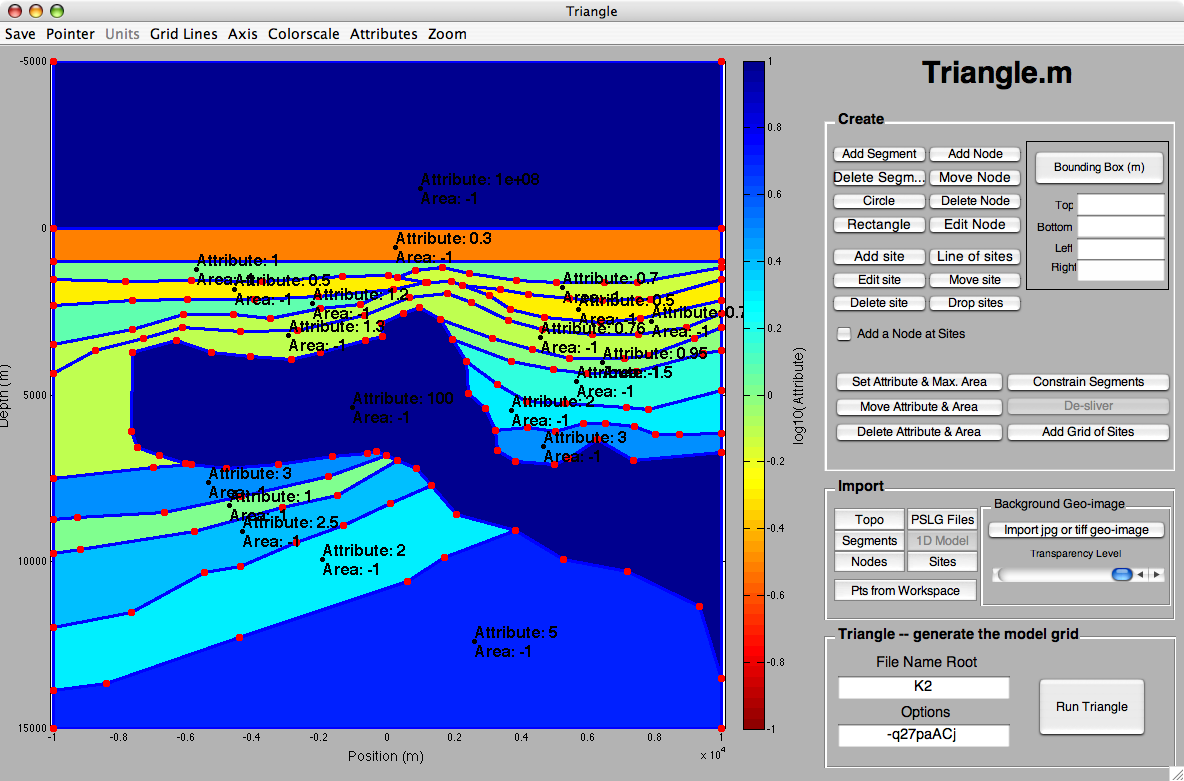
Triangle.m: A MATLAB model design interface for creating constrained, conforming Delaunay triangulation finite element grids. This was primarily written to create the 2D conductivity models used by the MARE2DMT and MARE2DCSEM codes, but Triangle.m is also useful for creating 2D models of other physical parameters of geophysical interest.
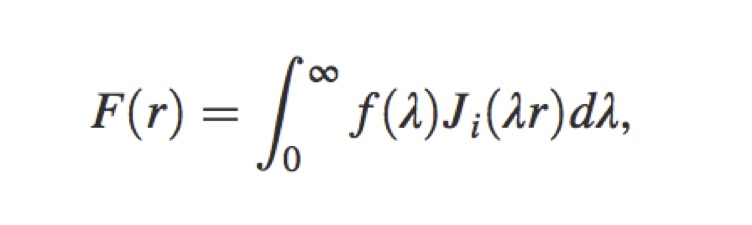
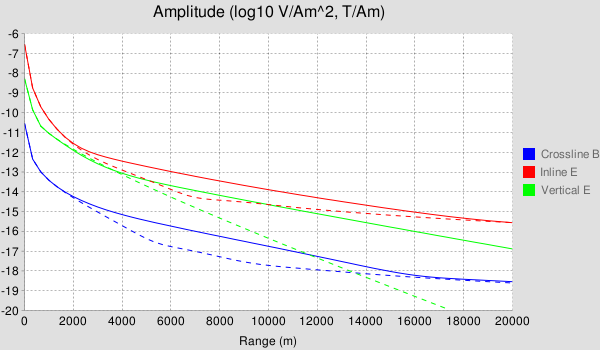
Dipole1D: Fortran90 code for 1D modeling of an arbitrarily located and oriented electric dipole transmitter in an N-layered model. I use a Lorenz-gauged vector potential that I formulated and coded from scratch. Not yet available.
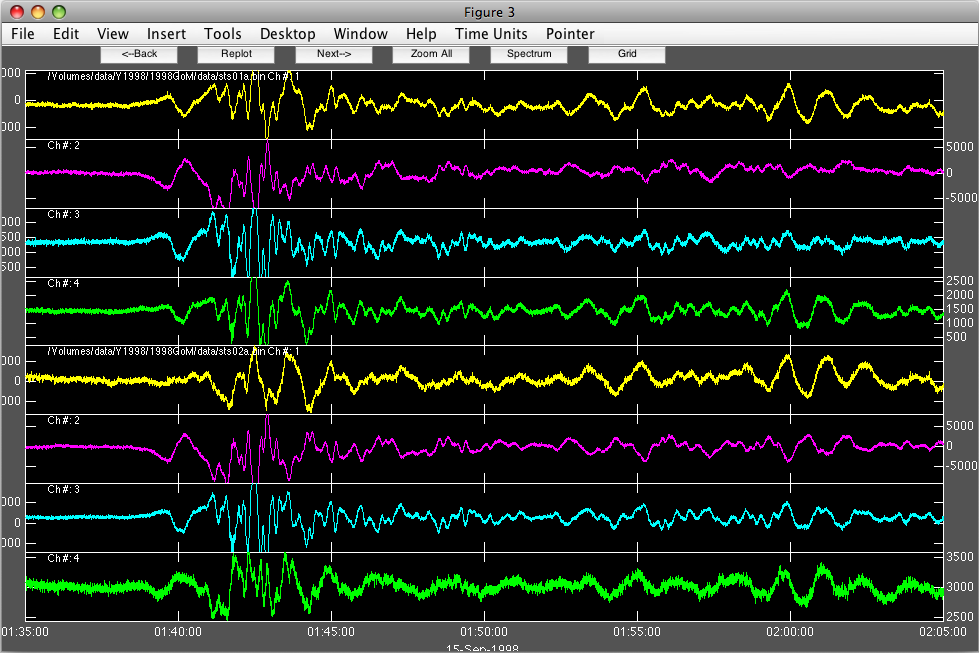
lcplot.m: A suite of Matlab codes for easy plotting of electromagnetic time series, power spectra and spectrograms for Scripps (.bin) and EMGS (.rx2) format data files. The nice looking signals shown at right are marine MT time series collected from 2 seafloor sites in the northern Gulf of Mexico.
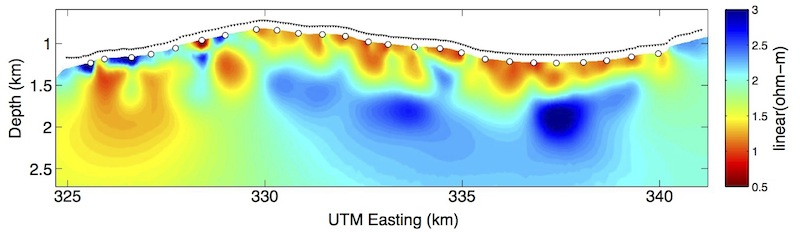
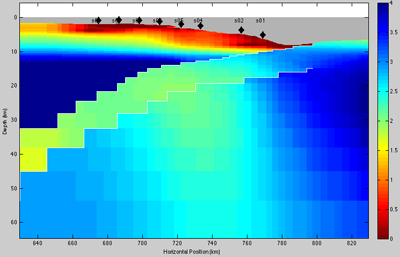
Occam2DMT: I have contributed to the recent updates to the Occam2DMT regularized inversion code. Occam is now in Fortran90 (mostly thanks to Marine EM Lab student David Myer's efforts). I have created a Matlab interface for plotting models, profiles, MT responses and pseudosections. The 2D inversion model shown at right is one of my current projects, a broadband marine MT survey of the subduction zone offshore the northeast coast of Japan.


Last modified: November 11 2007 08:24
email:
kkey@ucsd.edu